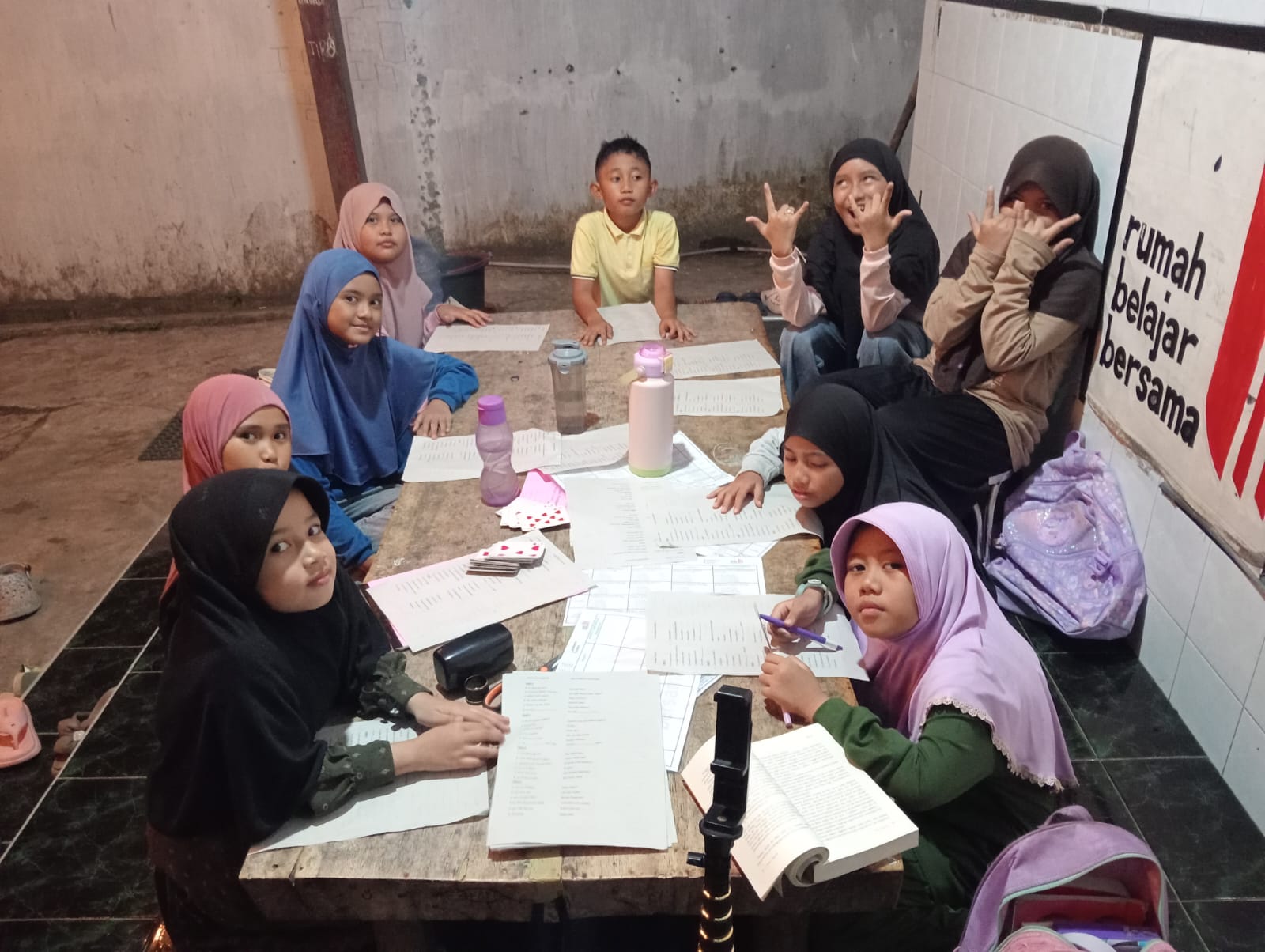
The world of children is play; learning through play, or games themselves, is learning. This is how these children first started. This is the beginning of a big design that will become the foundation for global competition. They did not yet understand why knowledge is important. All they knew was that learning must be fun. If not, the lessons and the teacher would become their common enemy.
This mindset changed after the elementary school children in this night class mastered English tenses. Moving to the next stage, they felt that doing written exercises on English sentences no longer required a noisy atmosphere full of games. They wanted quiet so they could think clearly while answering randomized tense questions. Occasionally, some children needed the teacher’s help with difficult questions. However, once they understood, they preferred working independently rather than being guided by the teacher.
Looking at the test results, most students scored above 90 out of 52 randomized tense questions. This is unusual for elementary school students in Bulukumba. At school, children only learn simple vocabulary and sentences for a very limited time, once a week. However, this was not the only target. These children also wanted to master randomized tenses because some of their peers could already do it very well.
Changing from ordinary to extraordinary learning habits is a long journey. This awareness grew step by step, along with patience in teaching. Every difficult time was faced with resilience. No child who fell behind was left behind; instead, they were constantly encouraged and taught to their maximum potential. Simply put, no student should be left uneducated. The teacher and all students helped one another and took responsibility for making every student smart.
Whether realized or not, this night class at Rumah Belajar Bersama (RBB) has applied a new learning model. They did not worry that the material—which people assumed was too heavy—actually became the main attraction for the students. They felt challenged and broke the limits, strengthening their foundation for a big dream. Why was RBB so brave to do this? Because they have enough human resources, not material resources. RBB tries to make learning a lifestyle; every place is a place to learn.
RBB designs its students for global competition. The teachers know the most important things to strengthen. They build a culture of literacy and academic speaking skills. This way, in the future, the students will be ready to face tough challenges, including writing in English. What else? This preparation is enough if the students later dream of working or studying abroad, including getting scholarships.
Children who are still in the play phase are not a problem for RBB. Instead, it is a good way to lead them into the world of advanced learning. After all, education will eventually be measured by the quality of human resources it produces. RBB stands right on that line.
Zulkarnain Patwa
Bulukumba, Monday, September 7, 2026
Tinggalkan Balasan