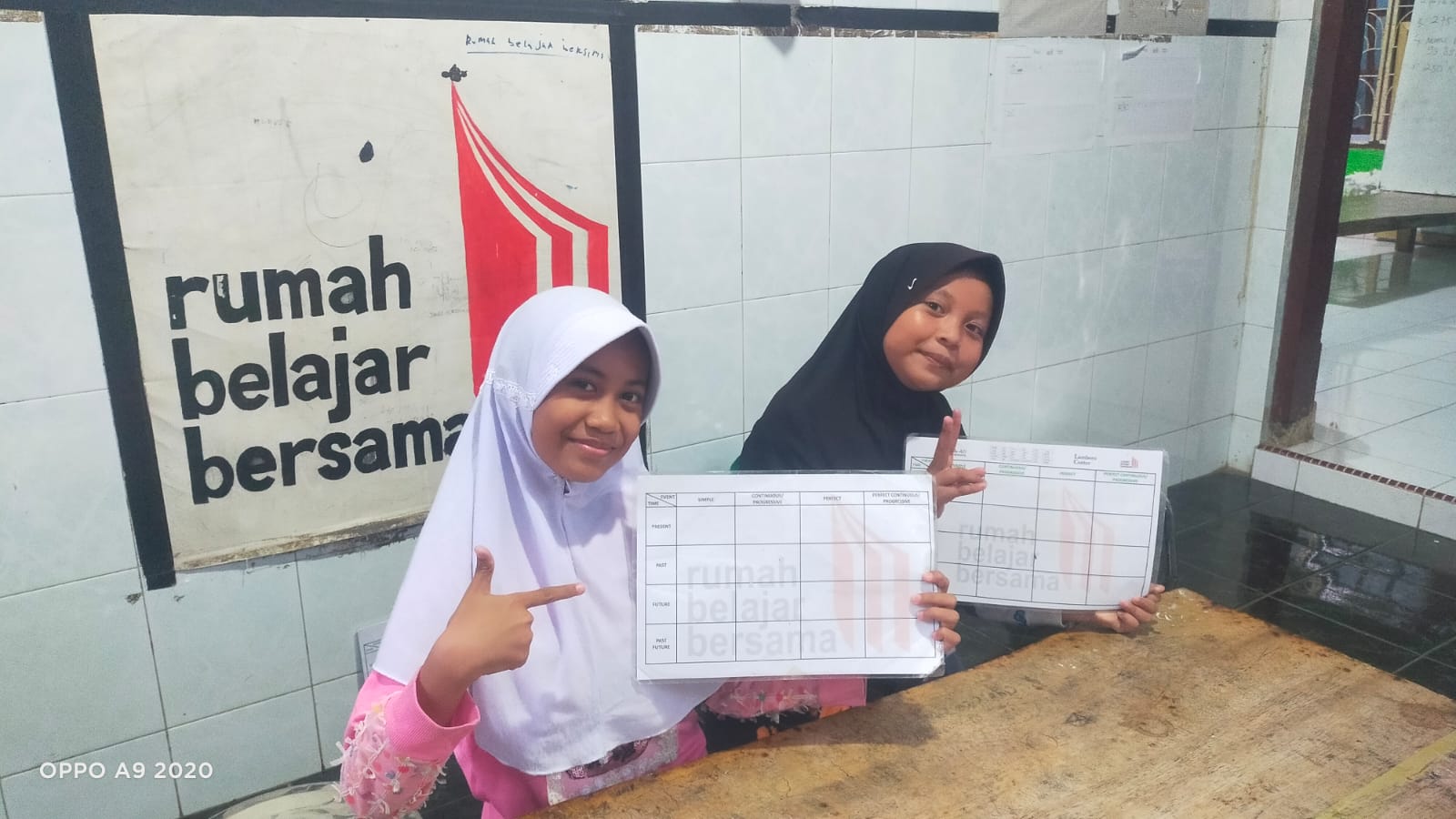
A 4th-grade elementary student and a 7th-grade junior high student are here to remind us of a lesson we have never taken seriously: they will shake the world of formal education.
Andi Nurhidayah Yadawiah (9 years old) and Afifah Rayya Az Zahra (12 years old) regularly memorize and recite both verbal and nominal tenses. They have memorized at least 1,438 sentence variations without looking at any notes. They do not do this all at once, but step by step in every class session. These children say nothing about formal school education. After all, they are still too young to understand why their parents sent them to non-formal education. Yet, a glimmer of a brighter future remains lit.
In less than 10 years, these two children will enter university. Together with millions of other Indonesian students, they will witness the incredible impact of the lessons they learned during their childhood. Many students will fall behind, unable to step into the international community or access valuable knowledge from abroad due to their limited English skills. In a healthy academic competition, students who are properly educated from childhood will have a great chance to face every challenge.
In this fast-paced era, people forget to plant.
People forget that ironwood and na’nasa (bitti) are trees unique to Sulawesi. For centuries, they have been the main material for building Bulukumba’s traditional boats. Their quality is so famous that they are marketed internationally. As a treasure of knowledge, the Pinisi boat was recognized as an Intangible World Heritage by UNESCO in 2017. These trees grow very slowly to make themselves hard and strong, becoming the best wood for shipbuilding and other vital human needs.
People forget about long-term education.
After graduating from high school, students rush to take short preparation courses for university entrance exams or jobs. These short courses waste their time and are very exhausting. They forget that they wasted a long period of time from elementary to high school. In fact, people are willing to spend hundreds of millions of rupiah just to pass into a certain campus or institution. We refuse to build a strong quality that is developed slowly over time.
Why do we not learn from nature around us? Why are we becoming more disconnected from the things around us? The universe stretched out before us is meant to be a reflection for human welfare and happiness. But then, greedy exploitation of natural resources destroys our own home—and there is no other home but nature itself.
The best quality trees teach us about endurance and long-term patience until they are ready to be used. The result will never disappoint. An education that ignores process, time, and patience will only create unskilled people who work outside their fields, act irresponsibly, and ruin themselves. We are destroying the human future, but if we realize it and are willing to take action, we can change this path.
Shaping the future depends heavily on what we do today. Past history has become a lesson for us living in the present. Non-formal education at RBB continuously creates renewable human resources, sharing solutions for our next generation.
Zulkarnain Patwa
Bulukumba, Tuesday, September 8, 2026
Tinggalkan Balasan